Echinacea tennesseensis
Tennessian Coneflowers
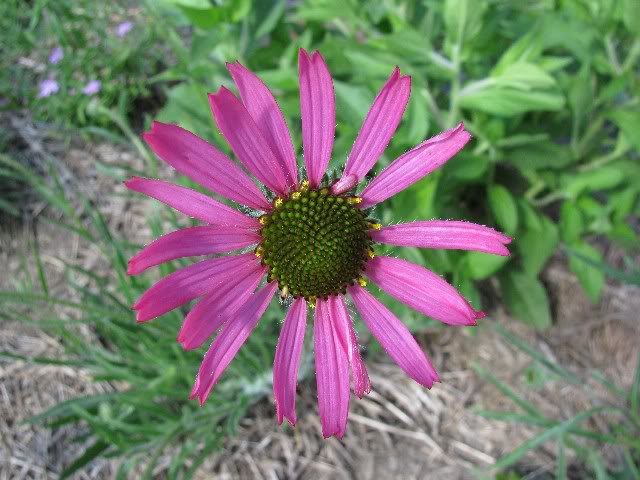
Echinacea tennesseensis — commonly called Tennessee Coneflower — is a rare native perennial valued for its upright, non-drooping rosy-pink petals surrounding a prominent dark cone, appearing from early to mid-summer. Dark green, slightly coarse foliage forms a tidy, upright clump and remains attractive through the season, sometimes developing muted tones in fall. Its more upright flower form, compared to other coneflowers, and its native heritage make it an excellent choice for naturalized plantings and pollinator gardens.
Mature Size:
Width: 12–18 in
Height: 18–24 in
USDA Zones: 5a–8b
Light: Full sun
Soil: Well-drained soils; tolerant of poor, rocky, or sandy conditions
Water: Low; drought tolerant once established
Wildlife: Attracts native bees, butterflies, and songbirds (seed heads)
Features & Landscape Uses:
Form: Upright, clump-forming perennial with strong stems
Excellent for native plantings, prairie gardens, pollinator gardens, and naturalized areas
Distinct upright petals differentiate it from other Echinacea species
Adapted to dry, open sites
Deer resistant and low maintenance
Maintenance:
Deadhead to extend blooming or leave seed heads for winter interest
Cut back in late fall or early spring
Avoid frequent division due to deep root system
- Plant type
- Perennial
- Height
- 18-24"
- Width
- 12-18"
- Hardiness zones
- 5–8
- Sunlight
- Full Sun, Partial Shade
- Growth rate
- Slow
- Bloom time
- Early Summer, Late Summer, Summer
- Flower color
- Violet
- Leaf color
- Green
- Fall color
- Green
- Attracts
- Butterflies
- Soil
- Clay, Normal, Sandy, Well Drained
- Shape
- Clumping, Upright
- Fragrant
- Yes
- Deer resistant
- Yes
- Drought tolerant
- No
Plant photos (1)
Select a thumbnail to change photos. Select the large photo to open it at full size.