Gleditsia triacanthos inermis 'Shademaster'
Shademaster Honeylocust
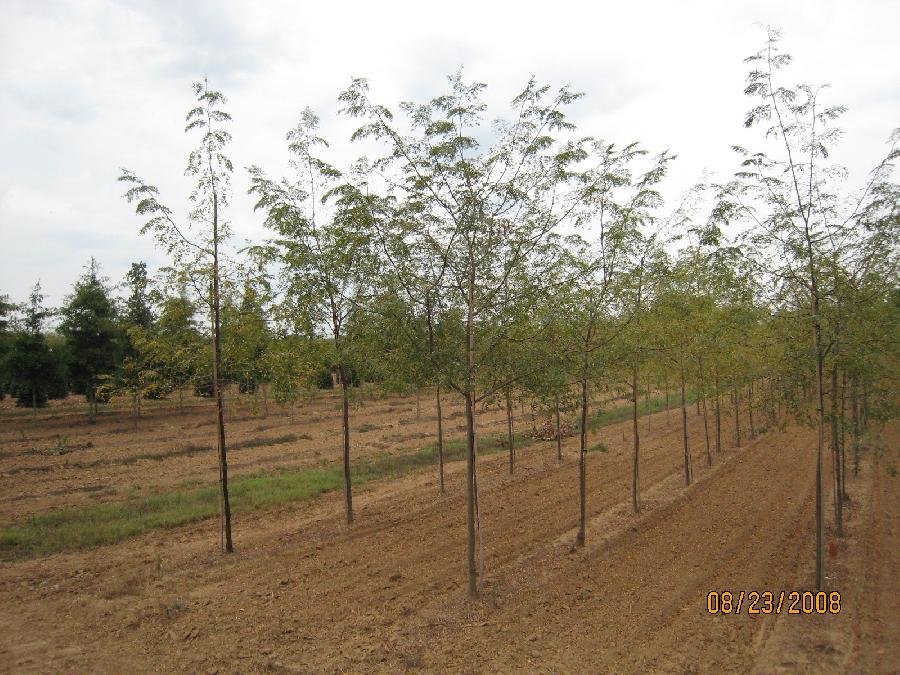
Gleditsia triacanthos var. inermis ‘Shademaster’ is a fast-growing, thornless deciduous tree valued for its strong branching structure and broad, spreading canopy that provides more consistent shade than many honeylocusts. Fine-textured green leaves emerge in spring, create light to moderate filtered shade through summer, and turn soft yellow in fall, while blooms are small and not ornamentally significant. Its durable nature and uniform habit make it a widely used shade tree for lawns, parks, and streets.
Type: Deciduous tree
Mature Size:
Width: 35–45 ft
Height: 40–60 ft
(10-year size: approx. 20–25 ft tall × 15–20 ft wide)
USDA Zones: 4a–9b
Form: Broadly oval to spreading, strong branching
Light: Full sun
Soil: Highly adaptable; tolerates poor, compacted, and urban soils
Water: Moderate; drought tolerant once established
Wildlife: Attracts bees; provides light habitat for birds
Features & Landscape Uses
Broad canopy provides more consistent shade
Strong structure for lawns and street plantings
Ideal shade tree for parks and large landscapes
Highly tolerant of urban conditions
Care
Very low-maintenance and durable. Plant in full sun for best growth. Prune when young to develop strong structure and branch spacing. Tolerates heat, drought, salt, and pollution. Generally pest- and disease-resistant, though occasional honeylocust pests may occur.
- Plant type
- Shade Tree
- Height
- 40-60'
- Width
- 35-45'
- Hardiness zones
- 4–8
- Sunlight
- Full Sun
- Growth rate
- Moderate
- Leaf color
- Green
- Fall color
- Yellow
- Soil
- Highly Adaptable
- Landscape use
- Accent Plant, Specimen, Street Tree
- Shape
- Oval/Rounded
- Deer resistant
- Yes
- Drought tolerant
- Yes
- 10-year height
- 15-20'
- 10-year width
- 20-25'
Plant photos (2)

Select a thumbnail to change photos. Select the large photo to open it at full size.