Morus Alba
White Mulberry
Morus alba is a fast-growing deciduous fruiting tree with a rounded to spreading crown, irregular branching, and glossy green leaves that may be oval, heart-shaped, or variably lobed on the same tree. Small greenish catkins appear in spring, followed by blackberry-like fruits that may ripen white, pink, red, purple, or black depending on the tree. While the fruit is attractive to birds and wildlife, white mulberry is non-native and invasive in many parts of North America, where it spreads by seed and can compete with native plants and hybridize with native red mulberry.
Type: Deciduous fruiting tree
Mature Size: 30–50 ft. wide × 30–50 ft. tall
USDA Zones: 3a–9b
Form: Rounded to spreading crown; often irregular, dense, and fast-growing
Light: Full sun to part shade
Soil / Water: Adaptable to many soils, including sandy, clay, and disturbed soils; low to medium water once established
Bloom Time / Length: Spring; inconspicuous catkins, followed by fruit in late spring to summer
Wildlife: Fruit is eaten and spread by birds and other wildlife; flowers may be visited by bees
Features & Landscape Uses:
Historically used as a shade tree, fruiting tree, windbreak, livestock shelterbelt, and food source for silkworms. However, it is usually not recommended for ornamental planting where it is invasive. Fruit can stain pavement, patios, cars, and sidewalks, and seedlings may appear readily in disturbed soil, fence lines, woodland edges, and unmanaged areas.
Care:
If already present, prune during dormancy to remove dead, weak, crossing, or low limbs. Avoid planting female fruiting trees near walks, driveways, patios, or septic fields because of messy fruit and spreading roots. In natural areas, remove seedlings while small to reduce spread.
- Height
- 30-50'
- Width
- 30-50'
- Hardiness zones
- 3–9
- Sunlight
- Full Sun, Partial Shade
- Leaf color
- Green
- Fall color
- Yellow
- Fruit color
- Brown
- Soil
- Highly Adaptable
- Landscape use
- Fruit, Provide Shade
- Shape
- Compact Rounded, Spreading, Weeping
- Bark
- Smooth
- Fruit
- Yes
- Salt tolerant
- Yes
- Drought tolerant
- No
Plant photos (1)
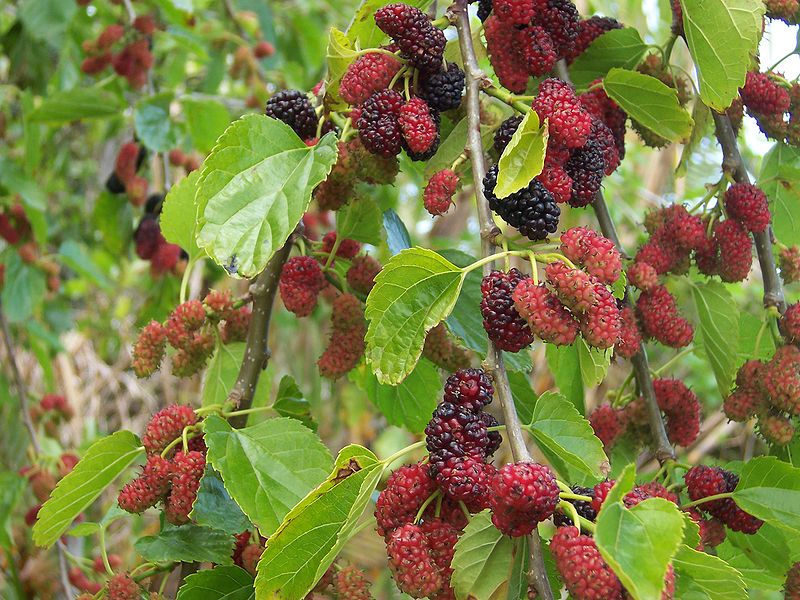
Select a thumbnail to change photos. Select the large photo to open it at full size.