Nepeta Faassenii 'Walker's Low'
Garden Catmint, Walkers Low Catmint
Nepeta × faassenii ‘Walker’s Low’
Walker’s Low Catmint / Faassen’s Catmint
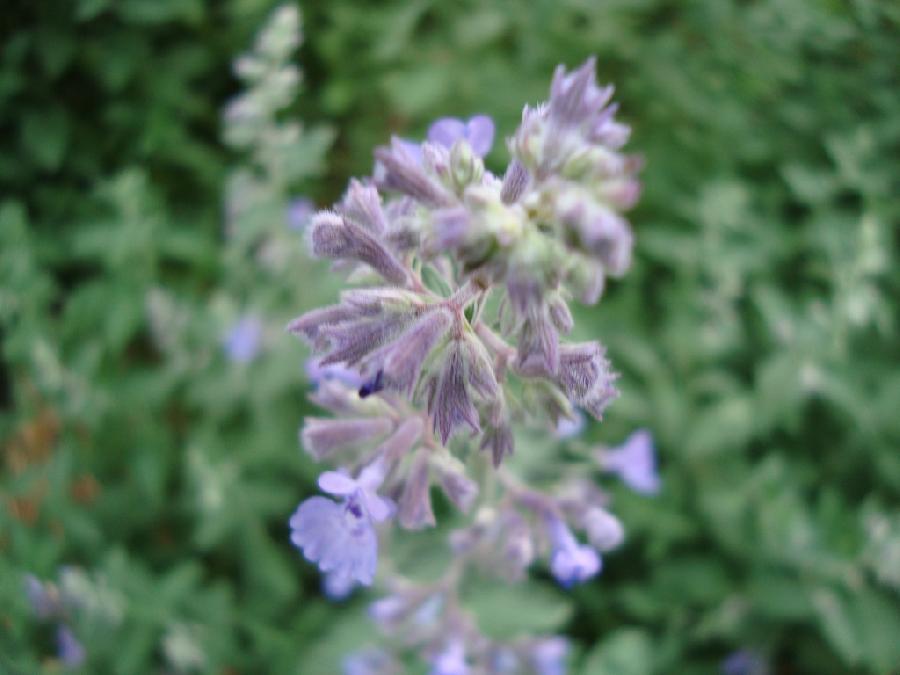
Nepeta × faassenii ‘Walker’s Low’ is a hardy herbaceous perennial with aromatic gray-green to silvery foliage and long-blooming lavender-blue flowers held on upright stems. It forms a spreading mound and blooms from late spring or early summer into fall, especially if sheared after the first heavy flush. Despite the name “Low,” it is not one of the very shortest catmints; the name comes from a garden called Walker’s Low, not the plant’s height. NC State lists it as a hybrid of Nepeta racemosa and Nepeta nepetella.
Type: Herbaceous perennial
Mature Size: 24–36 in. wide × 18–30 in. tall
USDA Zones: 3a–8b
Form: Spreading, mounded clump with upright flowering stems
Light: Full sun to part shade; best bloom in full sun
Soil / Water: Average to dry, well-drained soil; low to moderate water once established
Bloom Time / Length: Late spring through fall; often early summer to fall with trimming
Wildlife: Flowers attract bees, butterflies, and hummingbirds; deer and rabbits usually avoid the aromatic foliage. Wisconsin Horticulture specifically notes bees, butterflies, and hummingbirds are attracted to the flowers.
Features & Landscape Uses:
Excellent for sunny borders, cottage gardens, pollinator gardens, edging, mass plantings, slopes, herb gardens, rose underplanting, and dry garden areas. ‘Walker’s Low’ is valued for its long bloom season, soft blue-purple flower color, fragrant foliage, and ability to soften edges along walks or walls. It spreads wider than many compact catmints, so it works well where a fuller, billowy mound is wanted. NC State describes ‘Walker’s Low’ as having deep lavender-blue flowers.
Care:
Plant in well-drained soil and avoid wet winter conditions. Shear back after the first main bloom to encourage fresh foliage and rebloom. Cut back old stems in late winter or early spring before new growth begins. Avoid heavy fertilizer or overly rich soil, which can make the plant floppy.
- Plant type
- Perennial
- Height
- 18-30"
- Width
- 24-36''
- Hardiness zones
- 3–8
- Sunlight
- Full Sun, Partial Shade
- Growth rate
- Fast
- Bloom time
- Early Fall, Early Summer, Late Spring, Late Summer, Summer
- Flower color
- Lavender
- Fall color
- Light Green
- Attracts
- Bees, Butterflies, Hummingbirds
- Soil
- Average, Dry Area, Well Drained
- Landscape use
- Border, Mass Planting
- Shape
- Clump, Mounded, Spreading
- Fragrant
- Yes
- Drought tolerant
- No
Plant photos (1)
Select a thumbnail to change photos. Select the large photo to open it at full size.