Pawpaw
PawPaw
Pawpaw is a deciduous native fruiting understory tree with large tropical-looking green leaves, unusual maroon-purple spring flowers, yellow fall color, and edible oblong fruit that ripens in late summer to early fall. The fruit has soft, custard-like yellow pulp with a flavor often compared to banana, mango, or melon. It is the largest edible fruit native to North America and is especially useful in native plantings, edible landscapes, woodland edges, and naturalized gardens.
Type: Deciduous fruit tree / native understory tree
Mature Size: 15 ft. wide × 15–25 ft. tall; can reach 30–40 ft. in ideal conditions or wild sites.
USDA Zones: 5a–8b; sometimes grown into zone 9 with suitable conditions.
Form: Small pyramidal to rounded tree; often suckers to form colonies or thickets
Light: Full sun to part shade; young trees appreciate some shade, while mature trees fruit best with more sun
Soil / Water: Moist, fertile, well-drained soil; prefers consistent moisture and does not like drought when young
Bloom Time / Length: April–May; unusual maroon to purplish-brown flowers appear before or as leaves emerge.
Fruit Time: August–October; fruit ripens greenish-yellow to brownish and softens quickly when mature.
Wildlife: Fruit is eaten by birds, raccoons, opossums, squirrels, foxes, and other wildlife; flowers are pollinated mainly by flies and beetles, and pawpaw is a host plant for zebra swallowtail butterflies.
Features & Landscape Uses:
Excellent for edible landscapes, native gardens, woodland edges, naturalized areas, food forests, wildlife plantings, and small orchards. Pawpaw gives a tropical look in a hardy native tree and can be grown as a single specimen, but fruit production is much better when at least two genetically different pawpaw trees are planted for cross-pollination. Seedling trees may take several years to fruit, while grafted cultivars usually bear sooner.
Care:
Plant in a protected site with rich, moist, well-drained soil. Water regularly during establishment and mulch to keep roots cool and evenly moist. Protect young trees from intense afternoon sun and deer browsing. For fruit, plant two different cultivars or genetically different seedlings, because pawpaws are usually self-incompatible. Prune lightly in late winter to remove dead, damaged, crossing, or crowded branches.
- Plant type
- Fruit Tree
- Height
- 15-25'
- Width
- 15'
- Hardiness zones
- 5–8
- Growth rate
- Fast
- Bloom time
- Early Spring, Mid Spring
- Flower color
- White
- Leaf color
- Green
- Fall color
- Yellow
- Fruit color
- White
- Attracts
- Bees, Birds
- Soil
- Moist well-drained, Rich
- Shape
- Dwarf, Pyramidal, Rounded
- Fragrant
- Yes
- Drought tolerant
- No
Plant photos (1)
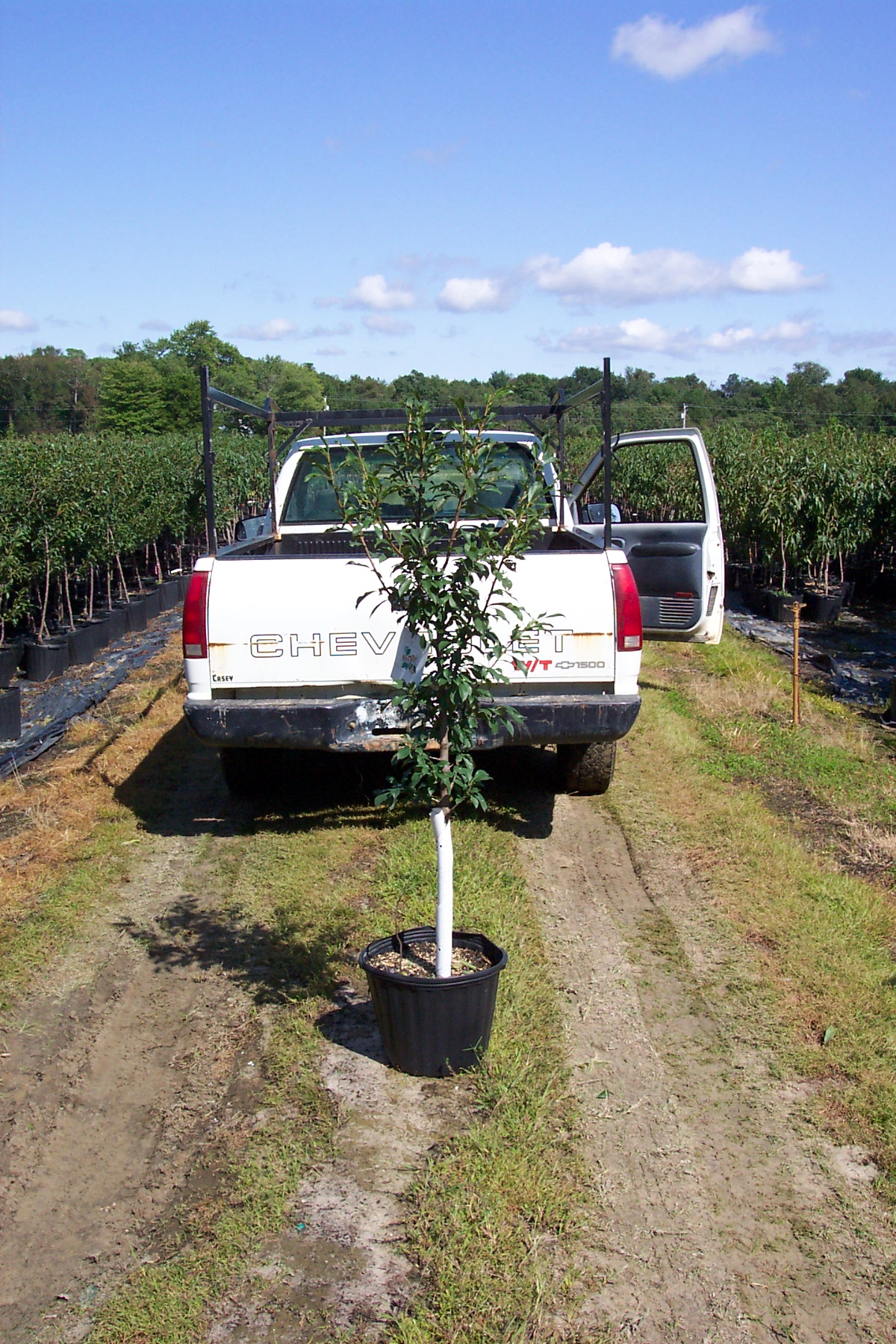
Select a thumbnail to change photos. Select the large photo to open it at full size.