Peach, Elberta
Elberta Peach
Prunus persica ‘Elberta’
Elberta Peach
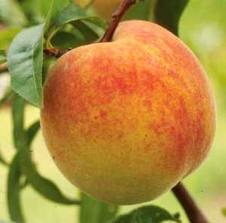
‘Elberta’ is a classic deciduous fruit tree known for large, golden-yellow peaches with a red blush and firm yellow freestone flesh. The fruit is sweet, juicy, aromatic, and widely valued for fresh eating, canning, freezing, baking, pies, preserves, and desserts. In spring, the tree produces showy pink flowers before the green foliage emerges, followed by a late-season crop. ‘Elberta’ is one of the best-known older American peach cultivars and has been widely grown for home orchards because of its dependable fruit quality and versatility.
Type: Deciduous fruit tree / peach
Mature Size: 12–15 ft. wide × 12–15 ft. tall on semi-dwarf rootstock; standard trees may reach 20–25 ft. tall and wide, while dwarf forms can be kept around 8–10 ft. with pruning
USDA Zones: 5a–9b
Form: Rounded, spreading fruit tree
Light: Full sun
Soil / Water: Fertile, loamy, well-drained soil; average water during establishment and fruit development; avoid wet or poorly drained sites
Bloom Time / Length: Early to mid spring; pink flowers are showy but can be damaged by late frost
Fruit Time: Late season, commonly August into early September depending on region
Wildlife: Flowers attract bees and other pollinating insects; ripe fruit may attract birds, squirrels, raccoons, and other wildlife
Features & Landscape Uses:
Excellent for home orchards, edible landscapes, backyard fruit gardens, sunny borders, and traditional fruit plantings. ‘Elberta’ is especially useful where a proven yellow freestone peach is wanted for both fresh eating and preserving. The firm flesh and freestone pit make it one of the classic choices for canning and freezing.
Care:
Plant in full sun with good air circulation. Prune annually during dormancy to maintain an open-center shape, control size, and encourage productive young wood. Thin young fruit after set to improve fruit size and reduce limb breakage. Watch for common peach issues such as peach leaf curl, brown rot, bacterial spot, borers, plum curculio, oriental fruit moth, and late-frost damage to flowers.
Pollination:
Self-pollinating / self-fertile, so one tree can produce fruit; nearby peach or nectarine varieties may improve overall fruit set.
Chill Requirement:
Commonly listed around 750–850 chill hours, depending on source and nursery strain.
- Plant type
- Fruit Tree
- Height
- 12-15'
- Width
- 12-15'
- Hardiness zones
- 5–8
- Sunlight
- Full Sun
- Growth rate
- Moderate
- Bloom time
- Spring
- Flower color
- Rose, White
- Leaf color
- Green
- Fall color
- Green
- Attracts
- Bees, Birds
- Soil
- Moist well-drained, Rich
- Landscape use
- Container, Fruit, Home Orchard, Specimen
- Shape
- Rounded, Spreading Canopy
- Bark
- Corky
- Fruit
- Yes
- Drought tolerant
- No
Plant photos (1)
Select a thumbnail to change photos. Select the large photo to open it at full size.