Paeonia lactiflora 'Raspberry Sundae'
Herbaceous Peony
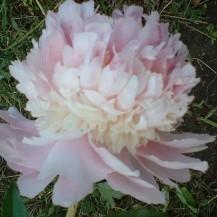
Paeonia lactiflora ‘Raspberry Sundae’ is a herbaceous perennial peony with large, fragrant, fully double bomb-type flowers. The blooms open in a soft “dessert” blend of creamy white, pale yellow, blush pink, and raspberry-pink, with deeper raspberry tones toward the center. It forms an upright clump of glossy green divided foliage that remains attractive after bloom. The American Peony Society lists it as a lactiflora peony introduced by Carl G. Klehm in 1968, with parentage ‘Charley’s White’ × own seedling.
Type: Herbaceous perennial peony
Mature Size: 24–36 in. wide × 30–36 in. tall
USDA Zones: 3a–8b
Form: Upright, bushy, clumping perennial; large double blooms may need support
Light: Full sun to part shade; best flowering in full sun
Soil / Water: Fertile, rich, evenly moist, well-drained soil; avoid wet, poorly drained sites
Bloom Time / Length: May; early to midseason depending on climate, usually about 7–10 days. Missouri Botanical Garden lists bloom time as May with pink-and-white flowers and raspberry crests in the center.
Wildlife: Fragrant flowers attract butterflies, bees, and other pollinating insects; generally deer and rabbit resistant.
Features & Landscape Uses:
Excellent for perennial borders, cottage gardens, cutting gardens, specimen planting, mass planting, and mixed sunny beds. ‘Raspberry Sundae’ is especially valued for its unusual layered pastel coloring, large fragrant blooms, and strong cut-flower quality. It works well with catmint, salvia, iris, allium, nepeta, and other spring to early-summer perennials. Some growers describe the flowers as very large, fully double, and useful for cutting.
Care:
Plant peony eyes about 1–2 inches below the soil surface; planting too deeply can reduce flowering. Provide good air circulation and water at the base when possible. Use a peony ring or support cage early in spring because the large double blooms can bend after rain. Remove spent flowers after bloom, but leave foliage through summer so it can feed the roots. Cut stems to the ground after frost in fall and remove old foliage from the garden.
- Plant type
- Perennial
- Height
- 30-36''
- Width
- 24-36''
- Hardiness zones
- 3–8
- Sunlight
- Full Sun
- Growth rate
- Moderate
- Bloom time
- Early Summer, Late Spring
- Flower color
- Pink, White
- Leaf color
- Green
- Fall color
- Green
- Attracts
- Bees, Butterflies
- Soil
- Moist well-drained, Rich
- Landscape use
- Accent Plant, Border, Container, Foundation, Mass Planting
- Shape
- Clump, Compact, Upright
- Fragrant
- Yes
- Deer resistant
- Yes
- Drought tolerant
- No
Plant photos (1)
Select a thumbnail to change photos. Select the large photo to open it at full size.